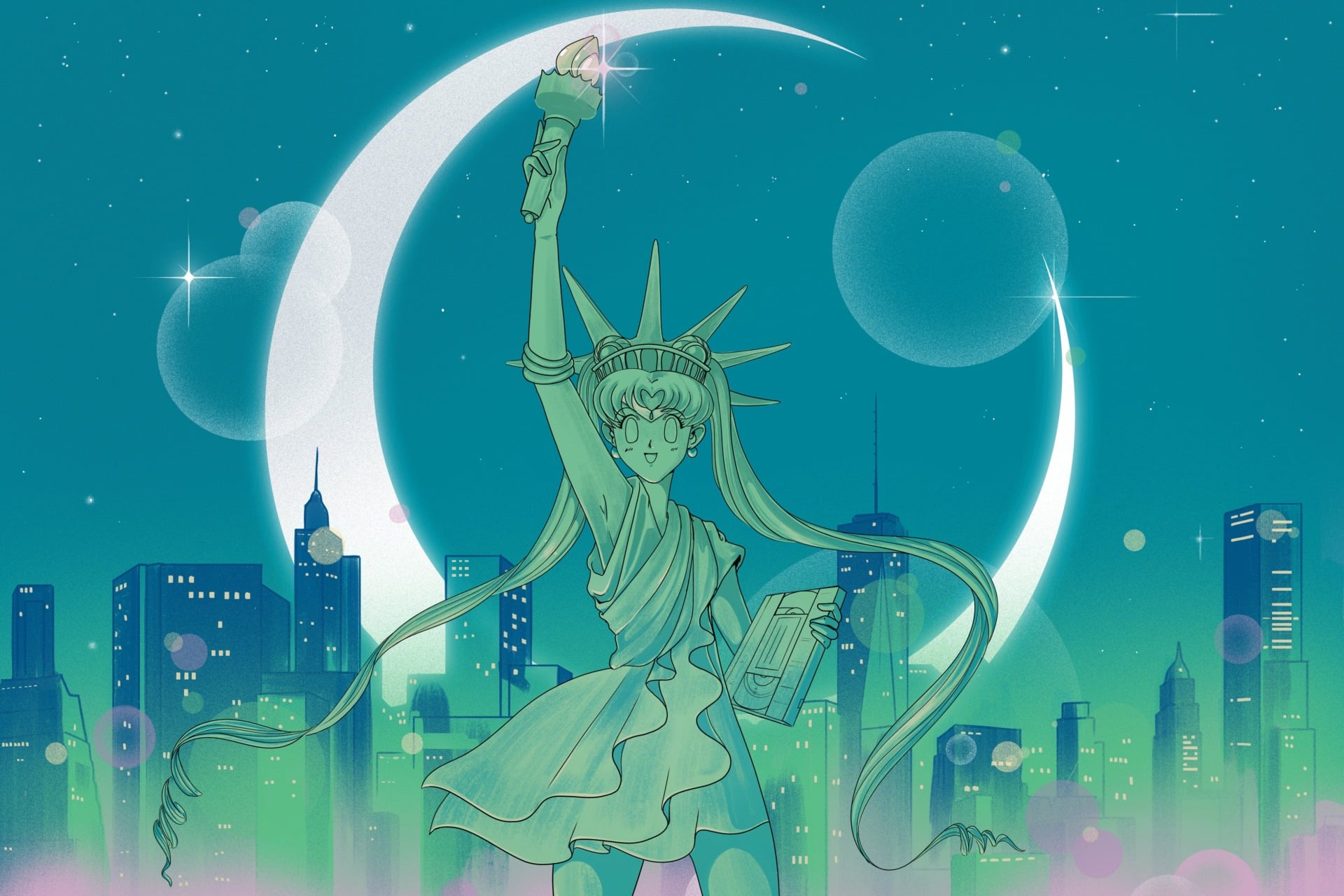
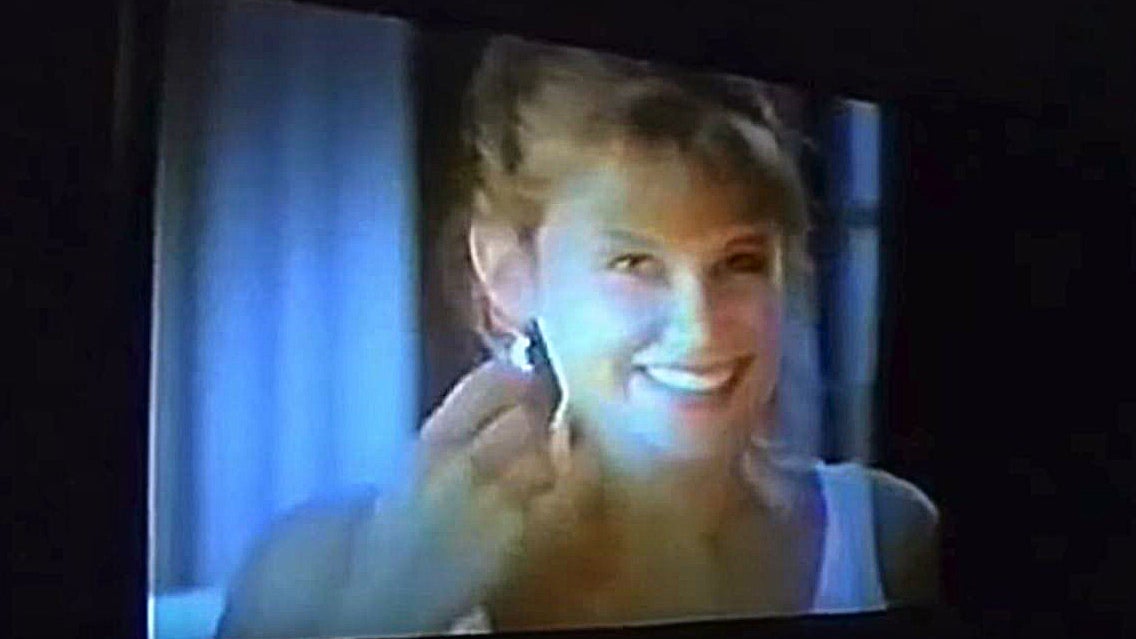
In 1993, before the magical girl anime Sailor Moon was released in the U.S., there was an alternate vision for it. It was an American vision. A total remake of the show with Saturday morning-style animation, intercut with footage of real-life, all-American high school teens.
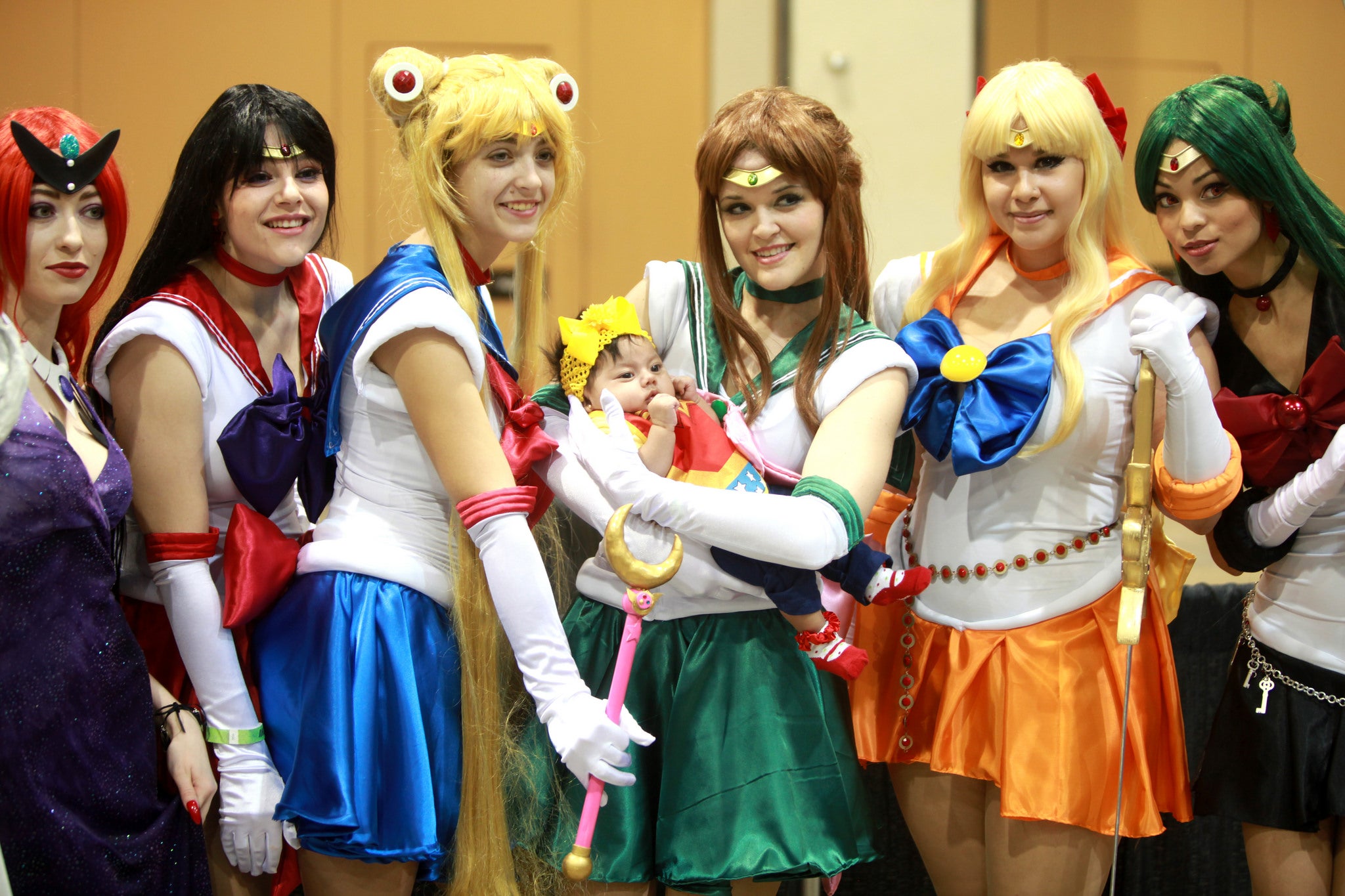
“Politically correct,” in the words of its creators, the proposed Sailor Moon would star Hispanic, black, and Asian Sailor Scouts, one using a wheelchair. The girls rode surfboards that rocketed them into space, to the tune of a bubblegum pop soundtrack.
A little psychedelic, the miscellaneous artifacts of this Sailor Moon together form either a pitch-perfect vision for a ‘90s American children’s show or, to die-hard anime fans, an irreverent Sailor Moon funhouse mirror straight from hell’s grimy content buckets.
This red, white, and blue Sailor Moon plan never got into orbit, and in 1995, the original, Japanese Sailor Moon anime began airing on U.S. television. 25 years ago, the Americanized version was a narrowly-avoided disaster, but a disaster that apparently left behind a 17-minute pilot episode, which I decided long ago that I had to try to find.
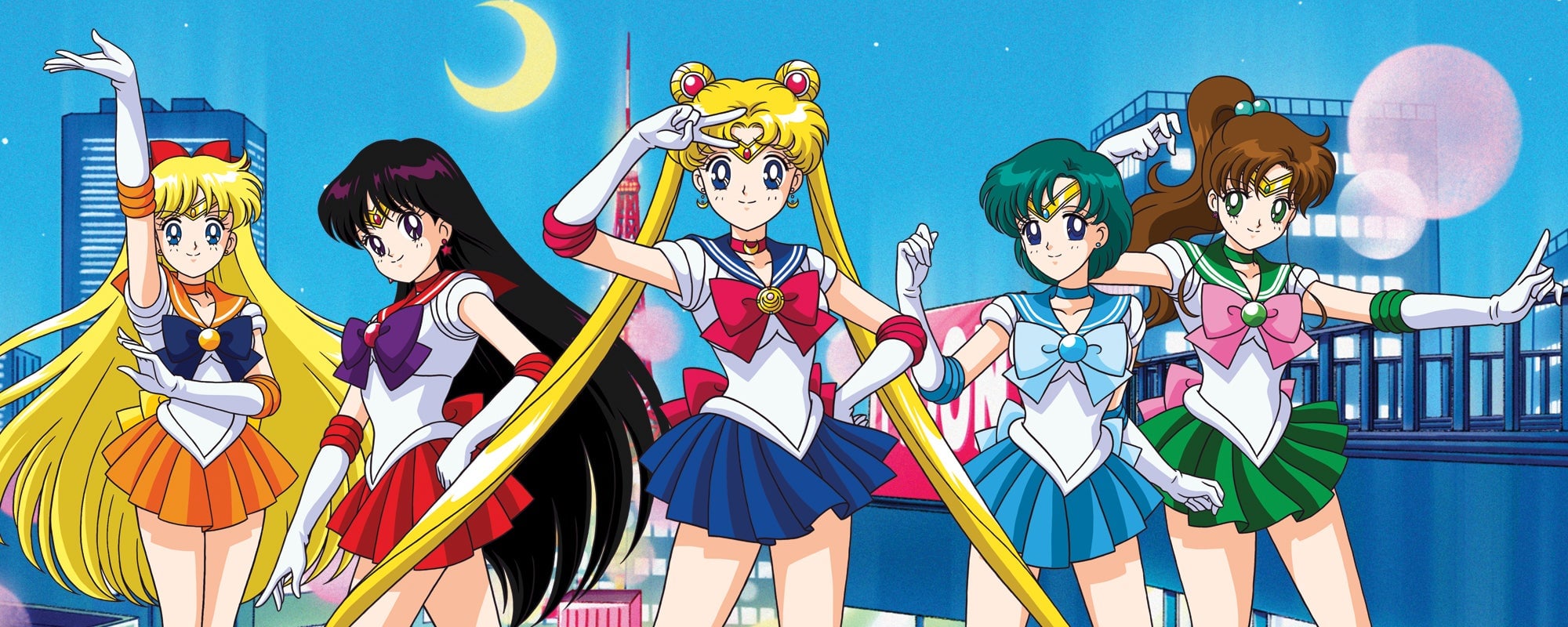
Sailor Moon’s road to global success was a long and somewhat tortured one. In 1991, manga artist Naoko Takeuchi premiered a shōjo (girls’) comic called Pretty Soldier Sailor Moon in Japan. It follows the adventures of a group of teenaged girl superheroes who fight villains and save the world. They’re led by Sailor Moon, the alter ego of Usagi Tsukino, a ditsy but good-hearted girl with two meatballs of blonde hair atop her head and a feline companion named Luna. Usagi’s time is split between her extra-planetary adventures and typical teen antics, like playing video games, blowing off homework, and chasing cute boys. It was a runaway hit in Japan, and behemoth studio Toei Animation quickly adapted Sailor Moon into an anime in 1992. It ran for 200 episodes and so far has generated well over $5 billion in merchandise sales, including toys by Bandai—the company that explored an Americanized version, as a way to sell toys here.
Decades later, the pilot for the American Sailor Moon show has achieved mythological status. That pilot—the only episode ever made—vanished into thin air, its remains scattered across the internet like animated ashes. Fans have labored to piece together the show’s history on Geocities-style websites with infinite-scroll Sailor Moon fan art and labyrinthine lost-media wikis. For over two decades, they’ve searched for its only episode with no success. I was unable to play bystander to a piece of lost anime ephemera. Immediately upon hearing about the legendary American Sailor Moon pilot, I knew I had to try to find it. I would not rest until I’d exhausted every lead.
After speaking with the dead show’s creator, animator, biggest fans, and haters, I think I have finally uncovered the full history of anime’s white whale. It involves a quarter-million-dollar unsuccessful investment, a drugged-up cat, no shortage of corporate intrigue, a Storage Wars-style drama, several eBay bidding wars, and, finally, a dusted-over DigiBeta reel in a retired millionaire’s Florida garage—which brought its own surprises.
In the early ‘90s, American television was not fertile ground for Japanese animation. Sure, Japan’s most popular cartoon, the kid-friendly Astro Boy, had made its way over through NBC Studios in the ‘60s. But when it came to what we think of as anime today, mainstream America simply didn’t have an appetite for it yet. Thrice-ripped VHS tapes fell into the hands of small, passionate groups of enthusiasts who’d subtitle anime for friends and pen pals. It wasn’t until 1997, when Cartoon Network launched an anime programming block called Toonami, that anime began to resonate powerfully with American kids and teens. A generation of children—myself included—grew up alongside Dragon Ball Z, Mobile Suit Gundam Wing, Outlaw Star and, of course, Sailor Moon
Japanese kids’ entertainment had made some major inroads into American kids’ culture, but it was live-action, rubber-suit superheroes, not animation. It all got started one day in 1984, when kids’ TV producer Haim Saban was relaxing in a hotel room in Japan on business. He flicked through the channels playing game show after game show until, as he told the LA Times, he landed on something that caught his attention. “All of the sudden there were these five kids in spandex fighting monsters. Don’t ask me why, but I fell in love. It was so campy!”
These were called Super Sentai shows, and after 8 years of rejections, Saban was finally able to bring one of them, Kyōryū Sentai Zyuranger, to the U.S. as Mighty Morphin’ Power Rangers. He hired American actors, spliced in some of the original explosions and monsters, and aired it to an audience of millions. It was proof that in the U.S. there was an appetite for campy Japanese superhero television. (Saban, who is chairman of the board of Univision, which owns Kotaku, did not return requests for comment.) The American version of the show was produced by a company called Renaissance Atlantic, and its president Frank Ward was on the prowl for a similar hit.
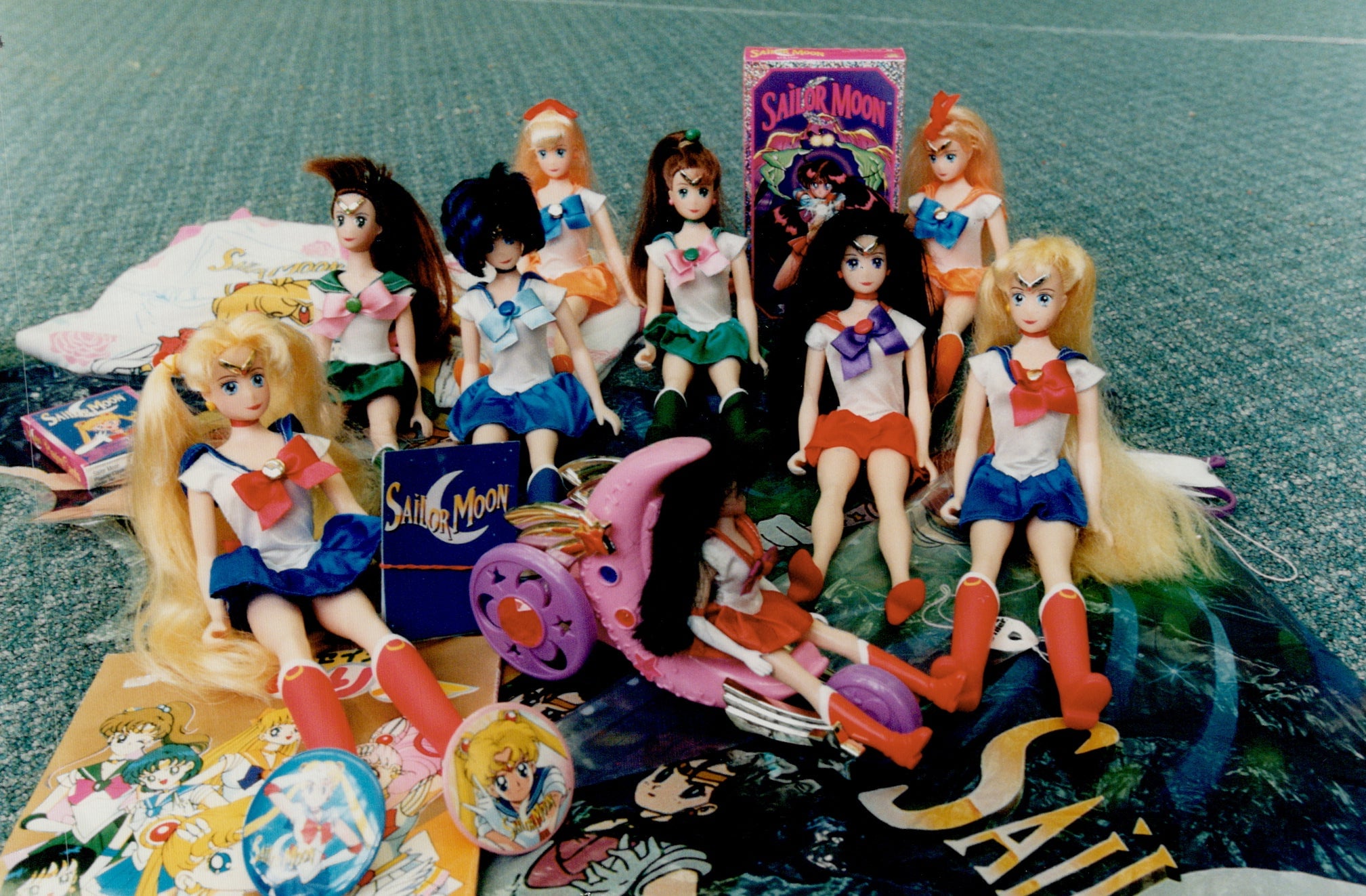
Ward was the former president of Bandai’s American division. The Japanese toymaker was currently raking in American dollars from Power Rangers toys, and Ward saw similar dollar signs when he looked at the toys Bandai was making in Japan of Usagi and her sailor friends.
Ward was unflappably confident that Japanese cartoons would find an audience on American television—and, more importantly, a consumer base for merchandise. For Power Rangers, it worked; I possessed two complete sets of Power Rangers bedsheets as a child. In the ‘90s, Power Rangers paraphernalia was inescapable. Ward, age 50 back then, figured that he could do the same with Sailor Moon, a similarly campy superhero show with a girl audience in mind. At that point, American investors believed it was a big risk to air a girls’ superhero show on American television. Didn’t only boys like superheroes? Ward believed that wasn’t the case.
I had never heard of Frank Ward until well after I kicked off this investigation. He has essentially no internet footprint—on purpose, he’d eventually tell me. I only found his name at the end of a long, unraveling string of what felt like dead-end internet investigative work.
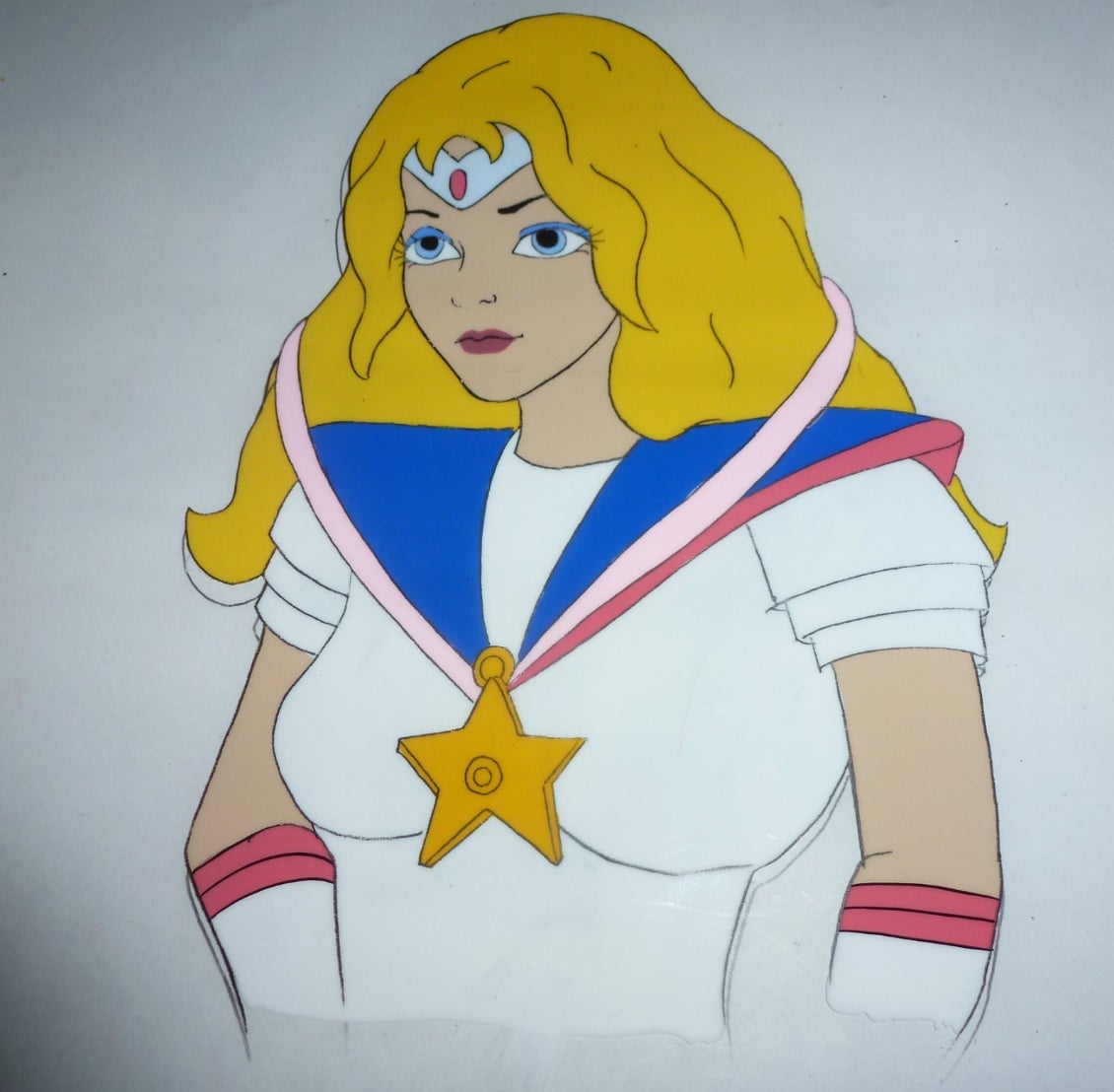
I heard of the American Sailor Moon pilot scrolling through Reddit in a trance-like state one afternoon at work. Accompanying the post was an image of a whitebread Barbie-like heroine in the Japanese sailor suit of an anime magical girl. Huh, I thought. That’s wacky. I cover anime for Kotaku, but was never in on the Sailor Moon hype. It was not my thing as a kid, and Sailor Moon’s 2014 reboot, Sailor Moon Crystal, wasn’t my thing as an adult. It was always more of a curiosity to me than something I enjoyed watching. In elementary school, I’d occasionally stow away in the basement to peep an episode before tuning in for Dragon Ball’s Toonami slot with my brother. In my tomboy-kid estimation, the show was very girly, a little incomprehensible, and conflicted with my self-image. Unquestionably, though, Sailor Moon is powerful to a generation of American girls my age.
Sailor Moon fandom is unquantifiably enormous. Its most extreme end has obsessed over the American, live-action Sailor Moon show for decades the same way diehard Twilight fans might hate-read the entirety of Fifty Shades of Grey. On scattered Sailor Moon fan sites, true connoisseurs have collected the detritus of the never-aired show. It’s blasphemous. And it’s hard to look away from. Most infamous, and complete, is what appears to be a music video attached to it. The only time it was ever shown publicly was at 1995’s Anime Expo, a small convention held at the Los Angeles airport Hilton the year that Sailor Moon, the original anime, debuted on U.S. television.
It opens with a plucky xylophone pop beat, a pan through the solar system, and, suddenly, the white-toothed smile of some high school Betty, who we must presume is Sailor Moon. The theme song kicks in, and it is of that classic overexplain-the-plot type typical of the 90s.
Sometimes she’s a fun-loving 16-year-old girl
Sailor, Sailor Moon
Her animated incarnation then appears in the uniform of the Sailor Scouts, which she pirouettes from within a pillar of sparkles.
Sometimes she’s a superhero for the world
Sailor, Sailor Moon
Then—whiplash—we see her giggling with her friends at school. And, next, an animated cat with a moon on its forehead. The girls are gliding around space on sailboats. Now, blasting away monsters. The live-action Sailor Scouts are doing the monkey dance next to their bunk beds. In the recording, the crowd laughs riotously.
“I don’t think it’s been shown before,” said the presenter after the crowd settled down. “And may it not be again.”
As far as anyone can tell, it was not. The only versions of this opening that you can find on the Internet are a handful of audience recordings, taken from odd angles, with crowd noises polluting the soundtrack.
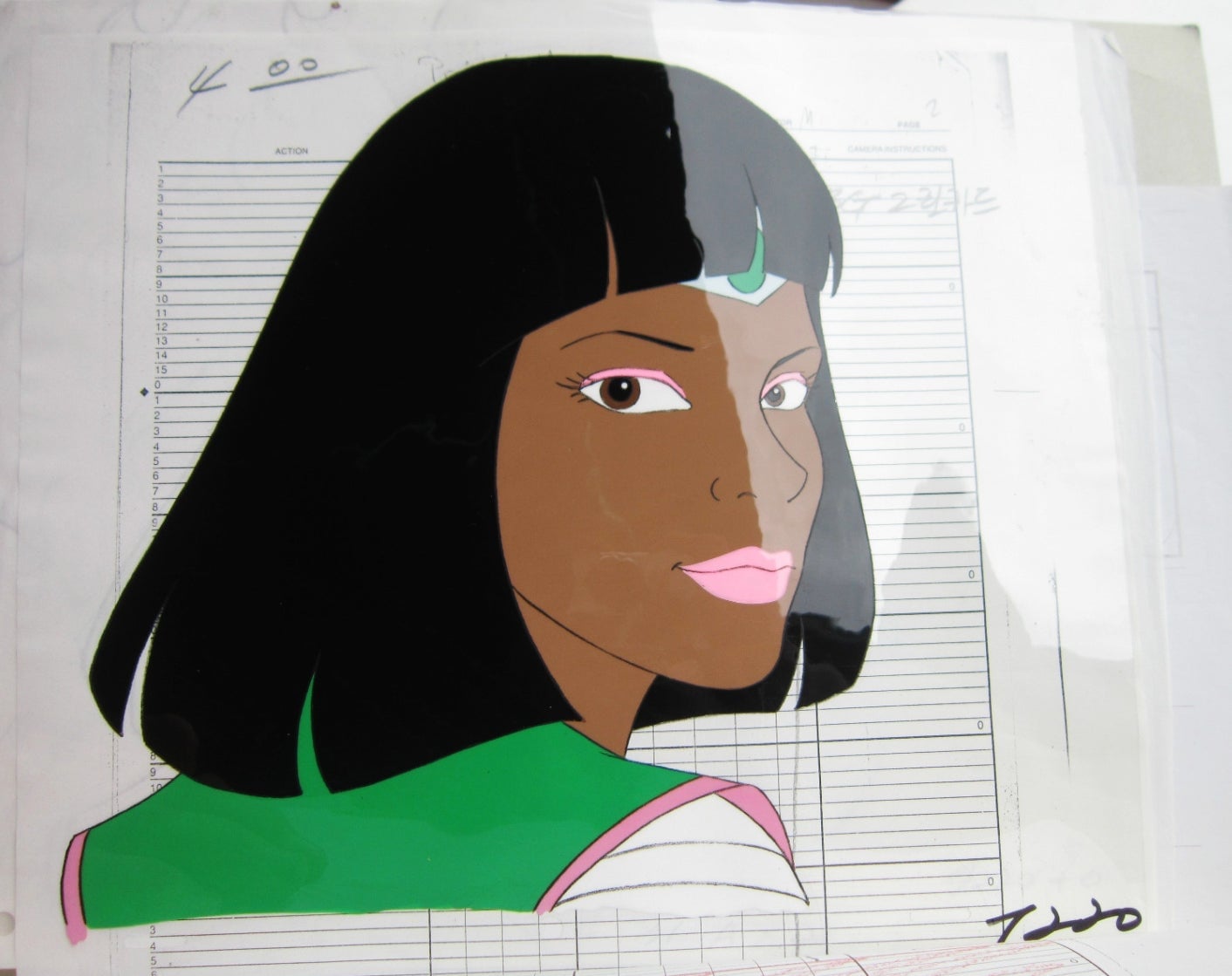
Scrolling through an endearingly archaic site called MoonSisters, which tells the story of this rogue Sailor Moon in bold white text against a blocky blue background, I read an amateur cartoonist named Koriander’s retelling of the show’s creation. As she tells it, bootleggers in America were already dubbing the Japanese Sailor Moon show in the early ‘90s when an animation and advertising company called Toon Makers decided to make its pitch to get in on the Sailor Moon action. They made the pilot, which failed for unexplained reasons. Below the short history is Koriander’s salty commentary—she hates it—and some scans of animation cels that were created for the production.
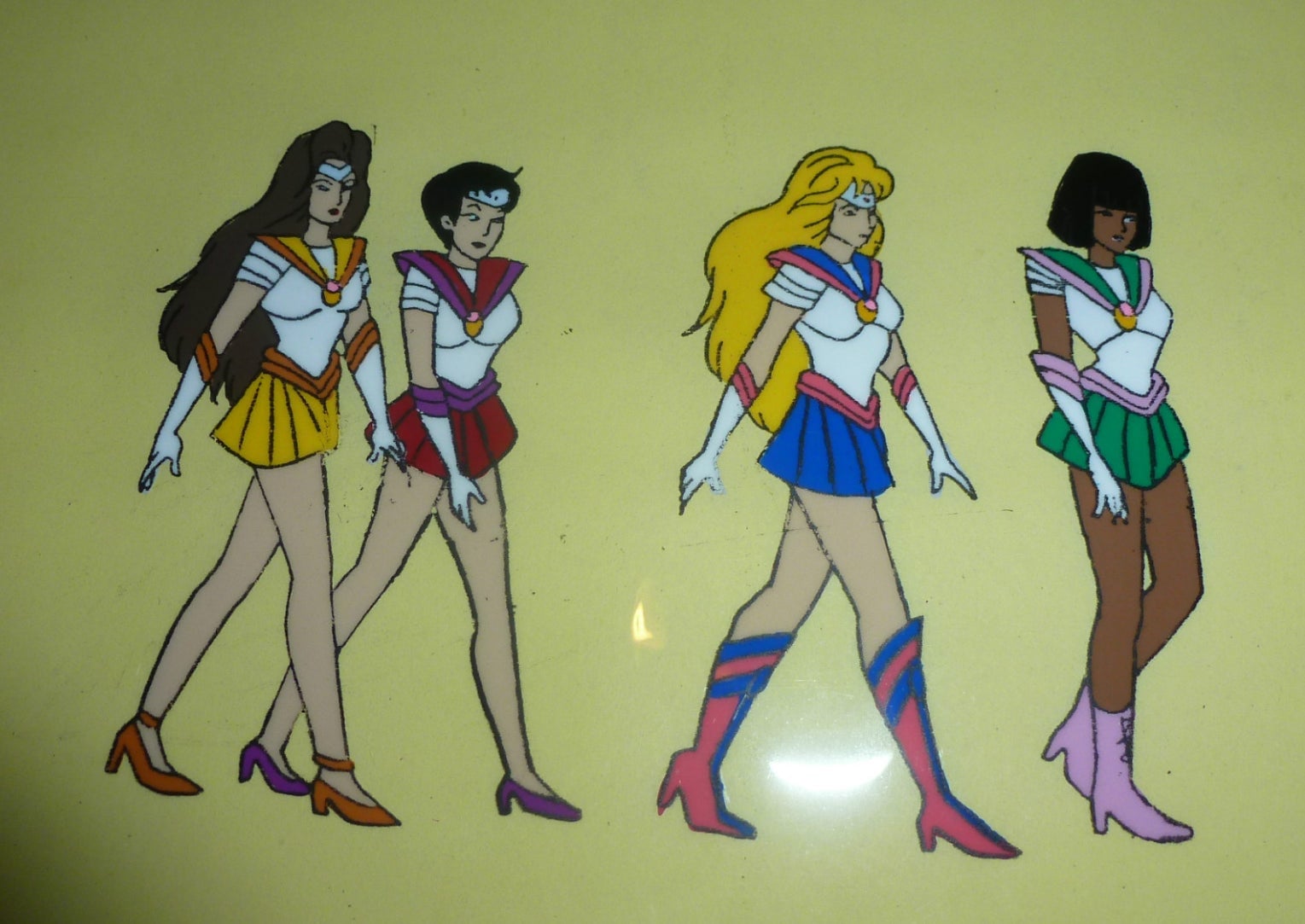
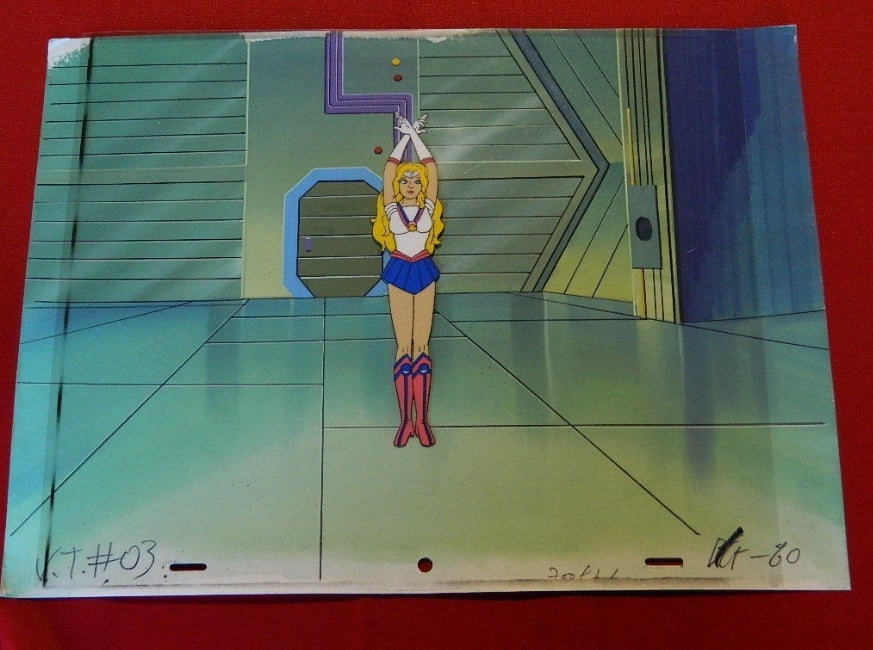
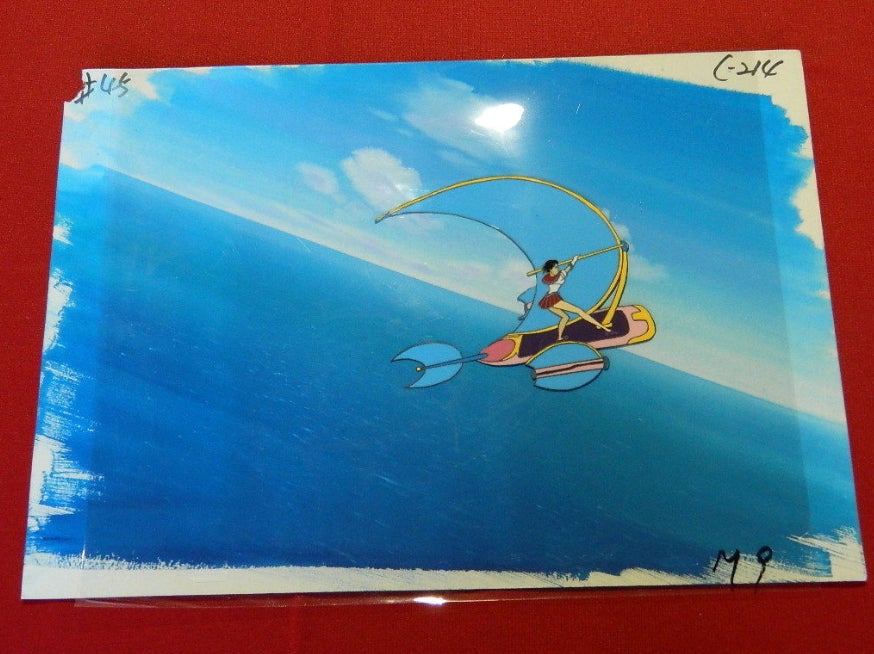
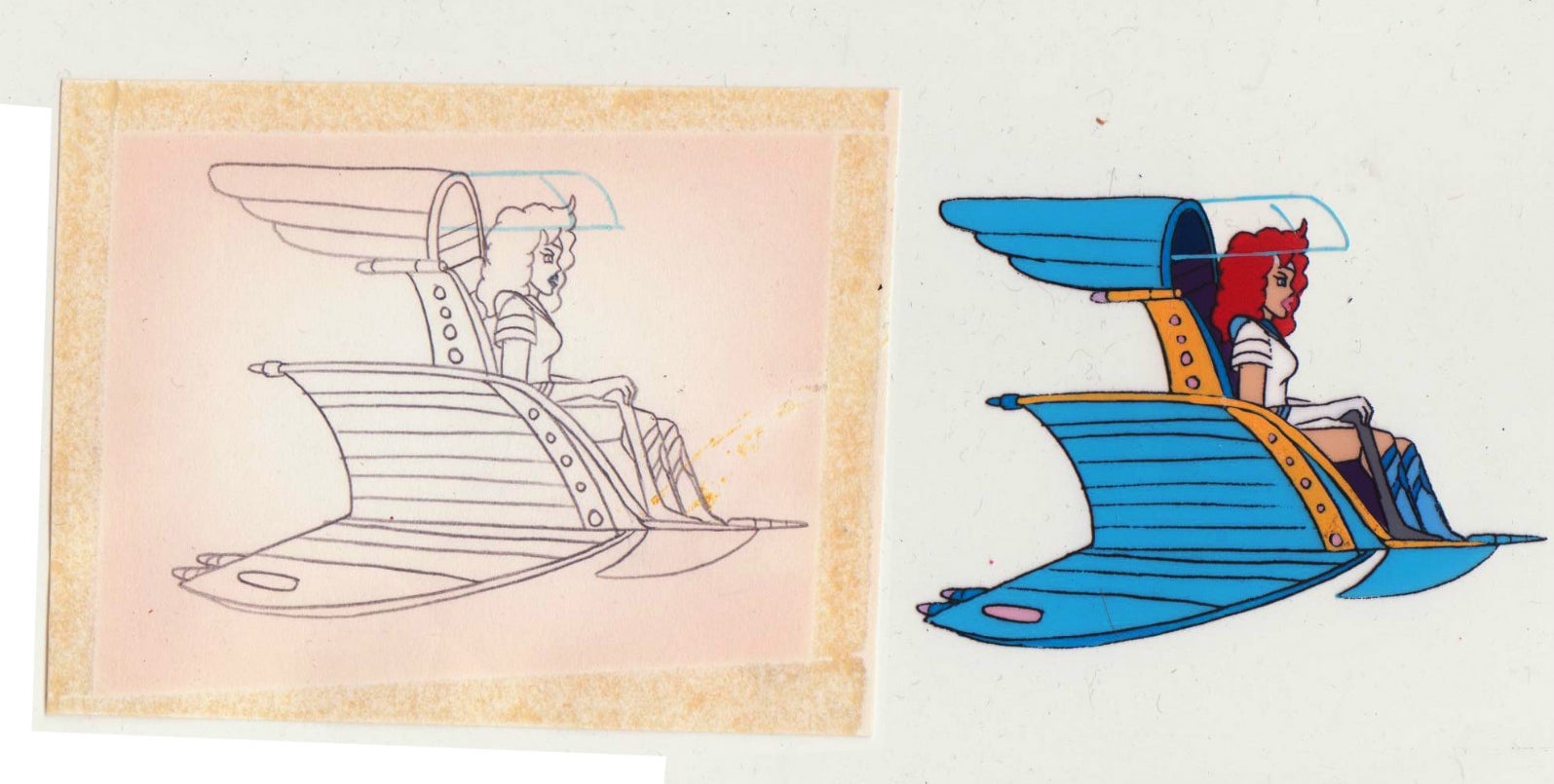
My first task toward uncovering the pilot was to call Toon Makers, the company whose name and contact information appears at the start of the video. It felt like a longshot that someone who’d worked on this short-lived, one-off novelty a quarter century ago would be around to pick up the phone. And yet, he was, and his name was Rocky Solotoff, the head of Toon Makers. It was the day before a long weekend, but Solotoff, in a hummy baritone radio voice, was still happy to explain his side of the story to me. Back then, he said, they called it “Project Y.”
Toon Makers created a 17-minute long pilot episode of the show, Solotoff said, something they could shop around to networks. “It was not for broadcast. It was literally proof of concept. We wrote it. We designed it. It was live-action and animation. It has lived longer than we ever thought it would,” he said.
Toon Makers was hired by a company called Renaissance Atlantic to cobble together a pilot, Solotoff said. (Sure enough, Frank Ward’s company name appears at the end of the video.) He found American actors and animators, although as was the standard in those days, some of the animation was created in Korea under the supervision of a man named Raymond Iacovacci.
Solotoff said that his crew scripted, designed, and shot the pilot, all as work for hire. He had 15 staffers, plus the Korean team, working on the pilot, which he said cost $280,000 in 1993 dollars. Solotoff spent six months making the proof-of-concept video. The video shown at the anime convention, he said, was a part of Toon Makers’ animation reel, something they’d send around to drum up new business.
I wasn’t the first person to call Toon Makers asking about the pilot. Solotoff said that he receives two or three inquiries every month from Sailor Moon hunters hoping to track it down. Eventually, he just stopped responding.
Even if Solotoff didn’t have the video I coveted, I wanted to ask him more about the show. “It was a time when ‘politically correct’ became ‘politically correct,’” he said. “We just wanted to keep the flavor of Sailor Moon and make it something where people who had no idea what it was could identify with these characters.” Solotoff recalled designing Sailor Mercury’s character to be a red-headed girl in a wheelchair. “We created a flying machine for her when they went into the animated world,” he said.
One actor for this American Sailor Moon was a cat who played both Luna and Artemis, Sailor Moon’s talking feline guides. Working with cats on-screen is notoriously difficult. “They drugged the cat so much it kept peeing on everything,” Solotoff said.
“It basically just died on the vine,” Solotoff said of the show. “The people who actually owned the concept sold the rights for the original anime.” The powers that be decided that dubbing the original anime into English was the way to go, and the American version was summarily axed. But what Solotoff didn’t, or couldn’t, answer was nagging me. Who funded the $280,000 pilot? Who had the idea to do this in the first place? What was the intended audience? How did the animation cels for this never-aired project make their way onto the internet? And, finally, where the hell was the pilot today?
Solotoff said he didn’t know where the pilot was, and even if he did, he didn’t own the copyright and could not allow me to distribute it. Disappointed, but invigorated from having found Solotoff, I decided to take a more grassroots approach.
On Deviantart, I found Koriander, the curator of that Sailor Moon fan site MoonSisters. Shortly after, I gave her a call. Perhaps, I thought, her story of how she got the animation cels could lead me to the pilot.
“I remember seeing this and being totally aghast,” she said of the show. “But while my initial reaction was very negative, it was also very serious. It seemed like someone put a lot of effort into it. How many episodes were planned? What was the thought process for the design?” After reading about the show in a short blurb in Animerica, a now-defunct anime magazine, finding out everything she could about it “became an odyssey.”
Koriander collected the cels in the same place everything turns up, these days: eBay. Around 2012, somebody on a Sailor Moon forum alerted users that the animation cels had hit the auction block site. Another fan who purchased some cels, Sam Moreland, told me he paid $100 for an image of Sailor Moon on her glider. Another cel, with images of Sailor Moon’s transformation, sold for $500. The owner of SailorMoonNews.com purchased some pages from the script, which he posted online. It opens on the moon.
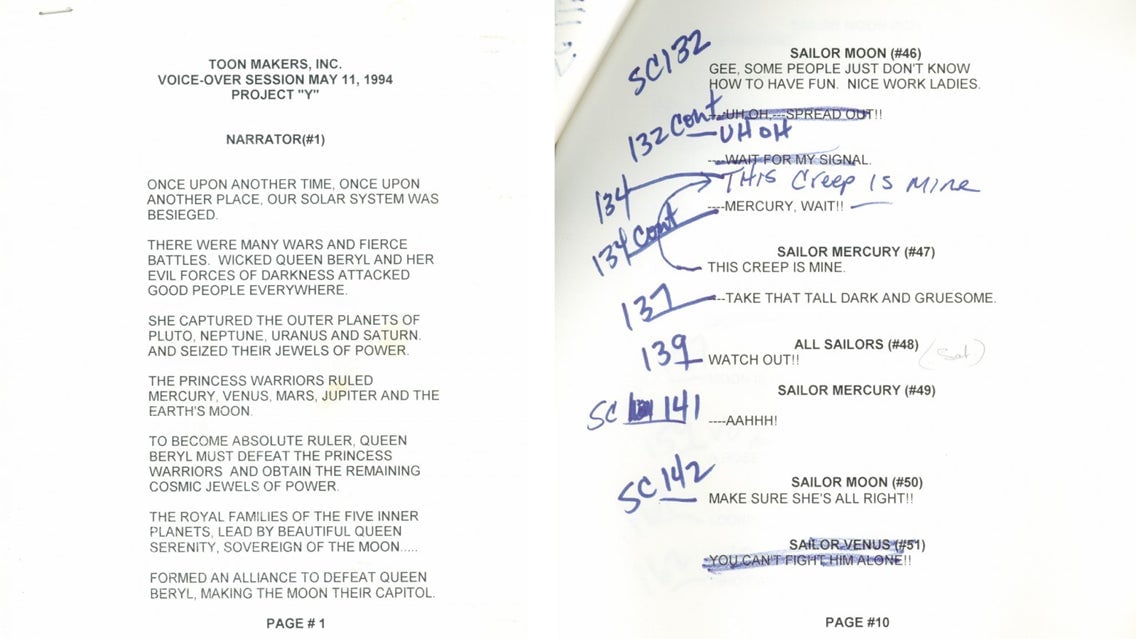
We begin with Sailor Moon’s betrothal to Darian, the prince of the Earth. “Oh Darian, I’ve so looked forward to this day,” says Sailor Moon, who, according to the script, is “obviously in love.”
“As have I,” Darian responds. At last, we will be together.” Then, a chill breeze. There’s a solar eclipse.
“Suddenly,” says a narrator, “the dark galleon of Queen Beryl appeared on the horizon.” The princesses hasten to their “sky flyers.”
“So this is what I missed the dance for?” asks Sailor Venus. “You guys are in for it. And if I break a nail, you’re really in for it.”
The script is completely bonkers. It’s impossible to picture the lines being recited without dramatically furrowed brows or evil-damning finger-pointing. The corniness is palpable. The world-building is questionable. And yet, if this aired when I was in elementary school, I would have eagerly tuned in, just as I tuned into Power Rangers.
The question remained: How did this stuff get out of Toon Makers’ vault? “From what I had heard, there was a storage locker that had been owned by Raymond Iacovacci,” said Moreland. According to his LinkedIn, Iacovacci is a writer, director, producer, and graphic designer who has resided in Los Angeles, Sarasota, Sydney, Manila and Seoul. After the project failed, Iacovacci was apparently made custodian of the cells, the script, the footage, and everything else, and put it all in a Los Angeles storage unit. Iacovacci apparently slipped up on paying rent, the unit was auctioned off, and the buyer sold the contents on eBay. I wondered whether they knew what they had.
For me, hearing that that everything left over from the American Sailor Moon show had been scattered to the four winds was immensely demoralizing. If the original tape of the pilot was in there, it could be anywhere, now. Iacovacci, proved impossible to reach. The Japanese corporation Toei, which owns the rights to Sailor Moon, did not return a request for comment. Saban’s company proved unhelpful.
Lead after lead turned up nothing, and things were looking hopeless. Unless, I thought, there was another copy. And perhaps, I thought, that copy might be in the possession of whoever helped fund the crazy thing: Renaissance Atlantic, the now-defunct production company that worked to bring over Power Rangers
Renaissance Atlantic’s internet presence exists in small whispers and cursory mentions on film sites and aggregators. The only thing I could find with a name attached was a 1994 Los Angeles Times articleabout the Power Rangers toy supply chain, and that name was Frank Ward. Unfortunately, Ward turned out to have zero Internet footprint, no contact information, no personal website. One of the only other mentions I could find on the Internet about Ward was a children’s book that he’d co-authored called Moville, which was published in 1999 by Renaissance Atlantic. No copies were available on Amazon, but there was a scan of its cover, which credited one Stephanie Fortel as the book’s illustrator. She did have an Internet presence, and I emailed her.
One day later, I received an email in response—from Frank Ward.
Great detective work Cecilia…….you found Frank Ward, he of Sailor Moon infamy. I was the founder and President of Renaissance Atlantic and expended an enormous amount of time and $ trying to bring Toei/Bandai’s Japan’s hit series to the US. My concept was to produce a live action series to the US. Both Fox and Saban (with whom I had worked on Power Rangers….and other shows) were all for it and planning had progressed………until we hit the great wall of Japanese intrigue and enigma.
Woah, I thought. Now we’re getting somewhere
Ward and I soon connected on a call. Now a 77-year-old retiree, he resides in Florida, and makes a point to say that he lives near the former senator George McGovern, who famously said: “You know, sometimes, when they say you’re ahead of your time, it’s just a polite way of saying you have a real bad sense of timing.” Ward paraphrases McGovern slightly differently: “The worst thing a politician can do is to be right too soon. Sailor Moon was a case of being right too soon.”
As the president of Bandai America in the 1980s, Ward was like the Cassandra of anime: He saw the potential for the Japanese cartoon medium to spread its seed—and Bandai’s toys—in the U.S., but nobody who could help believed him. “Japanese anime was viewed as a joke here in America,” he said. “There wasn’t a network that would go near them.” After working on Power Rangers, Ward started looking at Sailor Moon. In addition to its being anime, Sailor Moon had another count against it in the eyes of American television networks: “The television industry was all boys’ stuff,” Ward said.
Bandai had the rights to Sailor Moon toys, but no show to sell those toys in America. Ward wanted to share Japan’s beloved magical girls with superhero-obsessed American kids and sell Usagi dolls at Toys ‘R’ Us. He didn’t think simply dubbing the anime would work: Some scenes, like Sailor Moon in the bathtub, were too risqué for Saturday morning. A lot of cultural context would be lost. Also, Ward said, Toei wouldn’t agree to change anything significant in the show for American audiences. “We could take that animation or not. I just said no.”
“I had this bright idea to take that series, if I can get the rights, and work with Saban as a producer and make a show,” Ward said. “I went out to make a pilot all by myself and spent too much money doing it. It mixed live action with animation. You’re using real American girls doing American things—going to high school, talking to each other. When crises emerged in the world, they morphed into their animated versions.”
Ward contacted Rocky Solotoff at Toon Makers to make the proof-of-concept pilot—17 minutes of American Sailor Moon psychedelia. He says he invested $50,000 of his own money in it. Once the pilot was complete, Ward flew to Toy Fair in New York to air it. To hear Ward tell it, Fox was interested. Saban was interested. Bandai, apparently, was interested. Then, he says, “out of nowhere, came this little morsel from Toei: ‘Well, sorry, but we gave the animation rights to someone else.’”
That “someone else” was Dic Entertainment, whose name Ward relays with a small sigh. Dic, a familiar brand name to kids watching Saturday morning toons, would air Sailor Moon in its original form. It did make several changes—removing nudity, rewriting gay characters as straight, taking out some violent scenes—but by and large it was the real thing.
To Ward, this was a betrayal. He felt he’d been reeling in a catch potentially the size of Power Rangers, and had nearly gotten it on shore, but had the line cut on him for a cheaper option that he felt wouldn’t succeed. That was the end of Ward’s pilot, but it wasn’t a big success for Sailor Moon. The original airing of the show was a failure, cancelled quickly after low ratings and sluggish sales of Sailor Moon dolls. It wasn’t until later that the show became popular. Ward was surprised to hear that in the meantime, his own failure—the American Sailor Moon bastard pilot—was now a sought-after artifact.
After Ward described the whole story, I put the question to him: “Do you have the original? Do you have the copyright? If so, can we air it?”
It was possible, Ward said, that the pilot was sitting in his garage. And yes, he controlled the copyright. Gold.
Ward and I corresponded over the next few months via email. I checked in with him every week. Hey, hope you’re well. Did you find it? Hey, sorry to bother you. What’s the status on this? Eventually, he got back to me with good news: He’d found a tape reel in his garage that he believed contained the pilot. He didn’t have a player that could view it, but he planned to take it to a “local recording studio” that could transfer it to a modern format.
Kotaku could do the transfer, I suggested. “Much obliged,” he wrote back. “I do hope after all this there is something worthwhile on the film. Maddening if zip.”
A month later, Frank Ward and I met in New York City. He’d come up to visit his wife’s family, and brought the reel along for an in-person hand-off. Kotaku video producer Chris Person called up his media transferral guy, a video archivist, at whose office we all met up.
As Chris and I walked over from Kotaku’s office, we discussed the possible outcomes: Either it’s on the reel, or it’s not. If it was, that would be exquisite, a true victory for bullheaded journalists with dumb ideas and, of course, Sailor Moon’s hugely passionate fandom. If it wasn’t, we’d be disappointed, but happy to have met Frank Ward in person. Chris and I ascended the building’s elevator and, after opening a glass door, saw Frank Ward, a very tall and serious-looking man holding a tape with a hand-written label. This, he said, was “Project Y.”
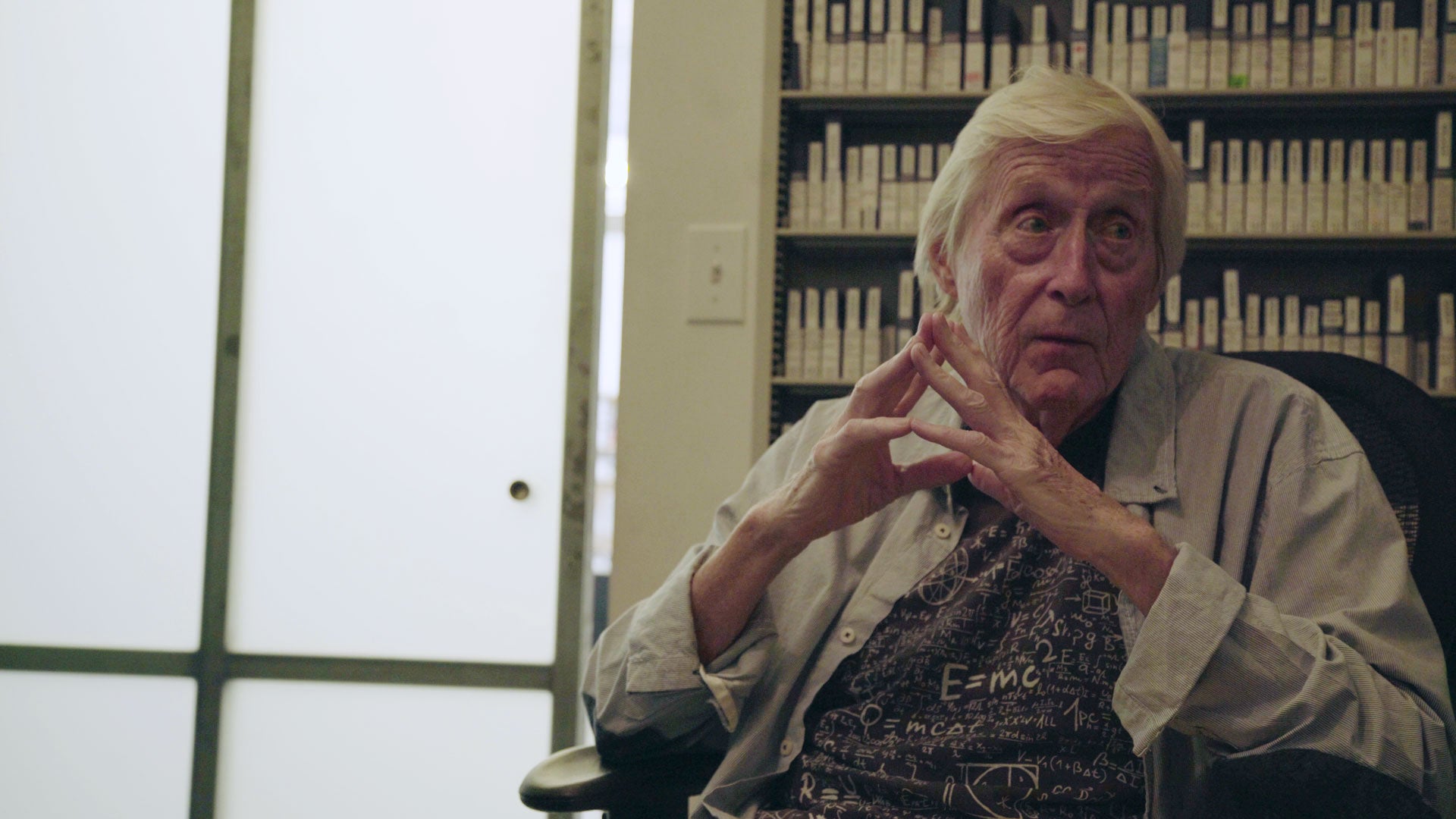
We shake hands. We filter into a back room stacked high with vintage video transferral hardware and three glowing screens. We pop in the tape.
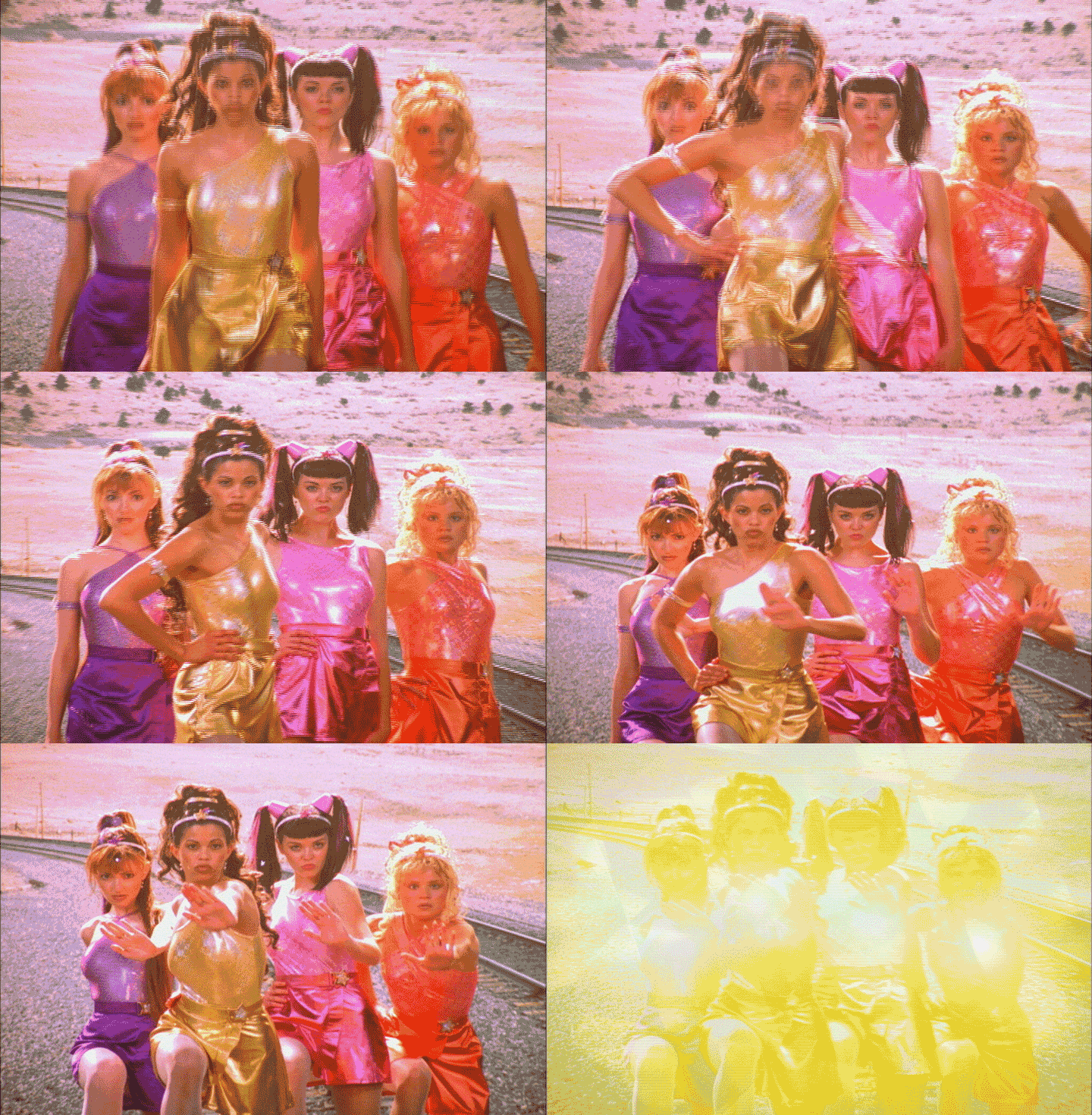
A flute plays, bells tinkle. A jungle appears. Then, rainbow doves. “Created by Frank Ward,” a title card reads. The camera moves through the bushes and happens upon a glistening hot tub of angelic women in Greek-goddess attire. Suddenly, it cuts to two small girls playing in front of a speeding train. The women spring into action.
Wooo-ooooo
It’s time to fly
Team Angel.
“This is it,” Ward says.
This is not it.
Person and I stare at the video, slack-jawed and speechless. Just like in Sailor Moon, the women’ shoes, fingernails, jewelry and costumes transform into glistening magical girl attire. Now they’re saving a cat. Now they’re rescuing a family from a hurricane.
“We invented this music,” Ward says. The theme song, in classic Frank Ward style, sets up the plot and, of course, makes reference to numerous props and accessories that Ward could sell at Toys ‘R’ Us. Danger don’t scare us / We’ll keep our cool, use our magic gold dust, goes one line. Stop trouble on the double, be peace providers / Zoom to Earth on our Rainbow Rider.
It was vaporwave psychedelica, pastel-pink-washed weirdness so burdened in kitsch it hard to see anything else. Two minutes and forty seconds into it, the screen went black. “Copyright 1998 BANDAI AMERICA,” read a final title card.
My first reaction was utter bafflement. While this show was clearly inspired by Sailor Moon, it was so obviously a separate project from the hybrid animated-live action show from 1993. Hell, it was an entirely different set of actresses. And the copyright date was five years later, after the Sailor Moon anime had already been aired, and cancelled, on US television. Frank Ward didn’t have what I was looking for. But he had something just as weird—something nobody on the Internet had ever even heard of.
“So that’s not the whole pilot,” I began.
“It was a promotion to try and sell the show,” Ward replied. “You don’t do pilots unless someone pays you to do them. This, we did on our own budget.”
“What do you mean, um… what do you mean that there’s no pilot?”
“A pilot, to me, is a complete episode,” Ward said.
“Uh, huh,” I said slowly. “Rocky said there’s a pilot. The fan community says there’s a pilot. You’re saying there’s no pilot. 17 minutes—Does this ring a bell?”
Ward sat back in his chair. “I don’t want to say that you’re wrong, but you’re wrong,” he said. “I would know. I did this. I don’t know what you mean by ‘pilot.’ This is what we had.”
But I had proof. I took out my phone to show Ward some of the American Sailor Moon animation cels that Toon Makers worked on. “I have no idea,” said Ward. I loaded up the YouTube recording of the American Sailor Moon show’s pilot from that anime convention years ago, the one that even has the name of his company on it. He said he’d never seen it in his life.
“The only way we can clear this up is to call Rocky on the phone and say, ‘What in the world were you talking about,’” Ward offered. So, right then and there, we called Rocky Solotoff. Always dependable, he picked up. I put the phone on speaker.
“I’m here with Frank Ward,” I said into the phone. “Frank told me he had some artifact from the American Sailor Moon show you two worked on together. . .what we were shown is something completely different from the live-action-slash-cartoon show you worked on.” I described Team Angel to him.
“I don’t remember Team Angel,” said Solotoff. “The piece that was on my reel is on the internet. That’s what we did—what I did.”
“But you didn’t do that with Frank,” I said.
“Yes, I did. I did it for Frank,” Solotoff responded.
“Frank, have you seen that before?” I asked.
“No,” said Frank.
“Well,” I said, “Frank is sharp and has a good memory…”
“And great blue eyes,” Solotoff said.
“Yes, and great blue eyes,” I said. “So either Frank’s memory is very poor, or…”
“Or mine is very imaginative,” Solotoff said.
Playing the theme songs to both live-action Sailor Moon shows over the phone, both Frank and Rocky agreed they didn’t know what the other was talking about.
The next morning, Ward called me up. “We’re talking about two different things,” he said. Half-asleep, I started taking notes.
“I must have tried to resurrect it as Team Angel. The Sailor Moon idea—we didn’t want to use that name. By 1998, maybe I was trying to talk Bandai into resurrecting it and we’d call it something else,” he said. While Sailor Moon’s then-small group of fans saw the show’s cancellation as a disappointment, Ward saw it as a vindication of his belief that the show wouldn’t succeed without a major revamp. So he thought he’d try again, six years later, with Team Angel, a live-action show produced without Toon Maker’s involvement. 25 years later, Ward had forgotten what he refers to as his “failure.”
One thing Solotoff and Ward could agree one: They didn’t know where the original pilot was.
“No one lies like an eyewitness,” Ward said, finally.
As I was walking Frank Ward down the street to help him hail a cab, I thought about the old Donald Rumsfeld quote about “known unknowns” and “unknown unknowns.” The Sailor Moon pilot was the known unknown, the thing we knew we didn’t have. Team Angel, though, was the thing we never even thought to look for, because we didn’t know it existed.
I embarked on this wild goose chase with the confidence and candor of a reporter who’s used to finding what she’s looking for, no matter how obscure. Court documents? Check. Interview subjects? Double check. I did everything right, and yet, I couldn’t find these 17 minutes of video no matter how doggedly I tried. The emotionally tidy ending here is “I didn’t find what I was looking for, but I found something just as valuable.” The truth is that, aside from Bandai’s $280,000, the value of the American Sailor Moon was granted solely by the anime’s fandom. Hell, even Frank Ward had forgotten about it. Is Team Angel as good a discovery, without the decades of mystery and ridicule that preceded it?
Waiting along 9th Avenue for a taxi, I asked Ward whether it was hard to know, deeply and with confidence, that anime would be a hit in the U.S., but to know it before there was a market for it. I wondered how it felt to know that American girls wanted a girls’ superhero show about friendship, about strength, about magic—but to misinterpret when, and in what form, they wanted it. He said it was very hard. I described modern anime conventions to him—not rinky-dink ones in airport Hiltons but massive events, packed with fans volleying between booths stacked high with anime figures, spending hundreds of dollars on Sailor Moon toys.
He’s been out of the business for decades, he replied. He said he’d never heard anything about that. I couldn’t tell whether it made him happy.
Correction, 7:10 PM ET: The story has been updated to clarify that although Haim Saban did see a Super Sentai show in 1984, it would not have been Kyōryū Sentai Zyuranger specifically, since that was not on the air at that time.